PART 1 OF THE END: THE THING BENEATH THE HOUSE
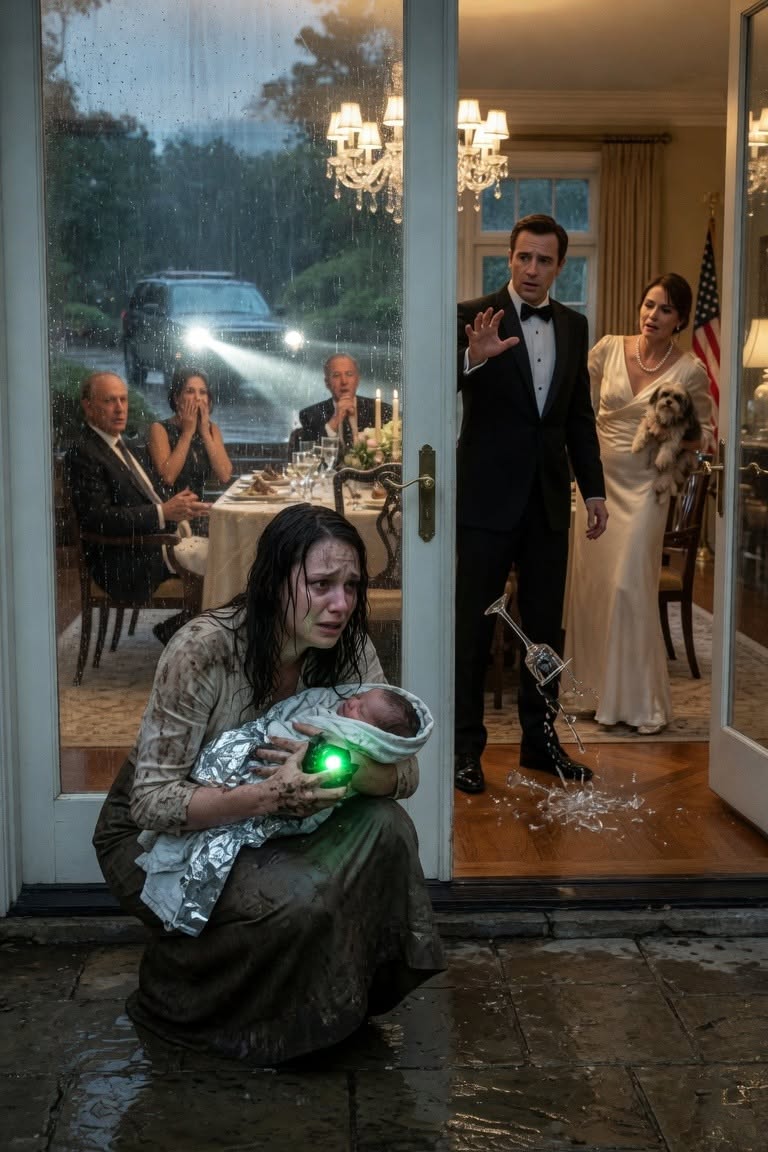
PART 1 OF THE END: THE THING BENEATH THE HOUSE
Morning didn’t arrive like relief.
It arrived like exposure.
The storm had passed sometime before dawn, leaving Hanoi-gray light filtered through hospital glass. The NICU hummed the same steady language of machines, but everything inside me had changed frequency.
Leo was still alive.
That was the only fact my mind kept returning to when everything else tried to intrude.
A doctor gave me the clinical update without ceremony.
“Stable. Oxygen dependency decreasing. No neurological red flags at this time.”
No red flags.
I almost laughed at how clean that sounded after a night like that.
JSOC had not left.
They had simply redistributed.
Not in the NICU anymore—but in the architecture of the hospital itself. Corridors I had walked before were now subtly occupied. Staff badges I hadn’t noticed before were now everywhere I looked twice.
Containment didn’t look like guards.
It looked like order.
The liaison from last night stood near the glass again.
He didn’t ask if I had slept.
People like him never asked questions they already knew the answer to.
“Major Hayes,” he said quietly, “we’ve completed preliminary extraction from the Whitaker estate network.”
I turned toward him.
And for the first time, I wasn’t bracing.
I was listening.
He continued.
“The system wasn’t built around your husband.”
A pause.
“It was built around your bloodline.”
Something in the air went still—not the room, but me.
I’d heard battlefield intelligence shifts before. I knew the sound of a narrative trying to rearrange itself into something survivable.
This wasn’t that.
This was structure revealing itself.
“What bloodline?” I asked.
The liaison didn’t hesitate.
“Hayes.”
The name hit the floor of my memory like something that had been locked away too deep to surface naturally.
He slid a single page across the table beside the NICU viewing glass.
Not digital.
Paper.
That detail mattered more than it should have.
At the top:
PROJECT LINEAGE: SUBJECT INTERSECTION REPORT
Below it—names. Dates. Redactions so thick they looked like scars.
And then a line that made my throat tighten without permission:
MATERNAL TRANSMISSION VECTOR CONFIRMED: MAJOR MAYA HAYES
I stared at it.
Not moving.
Not blinking.
Behind me, Leo made a small sound in his sleep.
The only thing keeping me in the room.
“You’re telling me,” I said slowly, “that my son was flagged… because of me.”
The liaison shook his head once.
“Because of what passes through you,” he corrected.
That was worse.
Because it implied I wasn’t the endpoint of anything.
Just the carrier of something that had already decided to keep going.
The corridor lights flickered faintly as if the building itself didn’t like the direction this conversation was taking.
He continued, quieter now.
“Whitaker wasn’t the architect. He was a node operator. Low-tier access holder. Someone with financial leverage and enough proximity to normalize observation.”
I looked at him sharply.
“So Eleanor. The guests. The system in the house—”
“Interface layer,” he said. “Social camouflage for data collection.”
My stomach tightened.
“And Richard?”
A pause.
“Useful,” he admitted. “Not central.”
That should have felt like revenge.
It didn’t.
It just felt empty in a different direction.
Because suddenly the dinner table, the glass, the laughter, the cruelty—it all shrank into what it actually had been.
Noise around infrastructure.
The liaison adjusted his stance.
“There’s something else you need to understand,” he said.
I didn’t respond.
Because I already knew this part would be worse.
“We found a dormant protocol tied to your son’s biometric signature,” he said. “It wasn’t active yet. But it was waiting for confirmation of survival.”
My hands went cold.
“Define ‘protocol,’” I said.
He met my eyes.
And didn’t soften it.
“Ownership escalation.”
Silence.
Not emotional silence.
System silence.
The kind that happens right before something either collapses or locks into place permanently.
I looked through the glass at Leo.
At the tiny rise and fall of his chest.
At the monitors translating his life into numbers powerful people could interpret.
And I finally understood what JSOC had been reacting to all night.
Not a crisis.
A trigger event.
Something that only mattered if it completed.
The liaison lowered his voice.
“We’re initiating protective custody status for both of you until we determine the full scope of the network.”
I nodded once.
But my attention was no longer on him.
Or the paperwork.
Or even the system.
It was on the reflection in the glass.
My face.
May you like


My son’s outline behind it.
And the invisible space between us that the world had apparently been watching long before I ever knew I was part of it.


