Chapter 3 - The Percentage That Didn't Make Sense
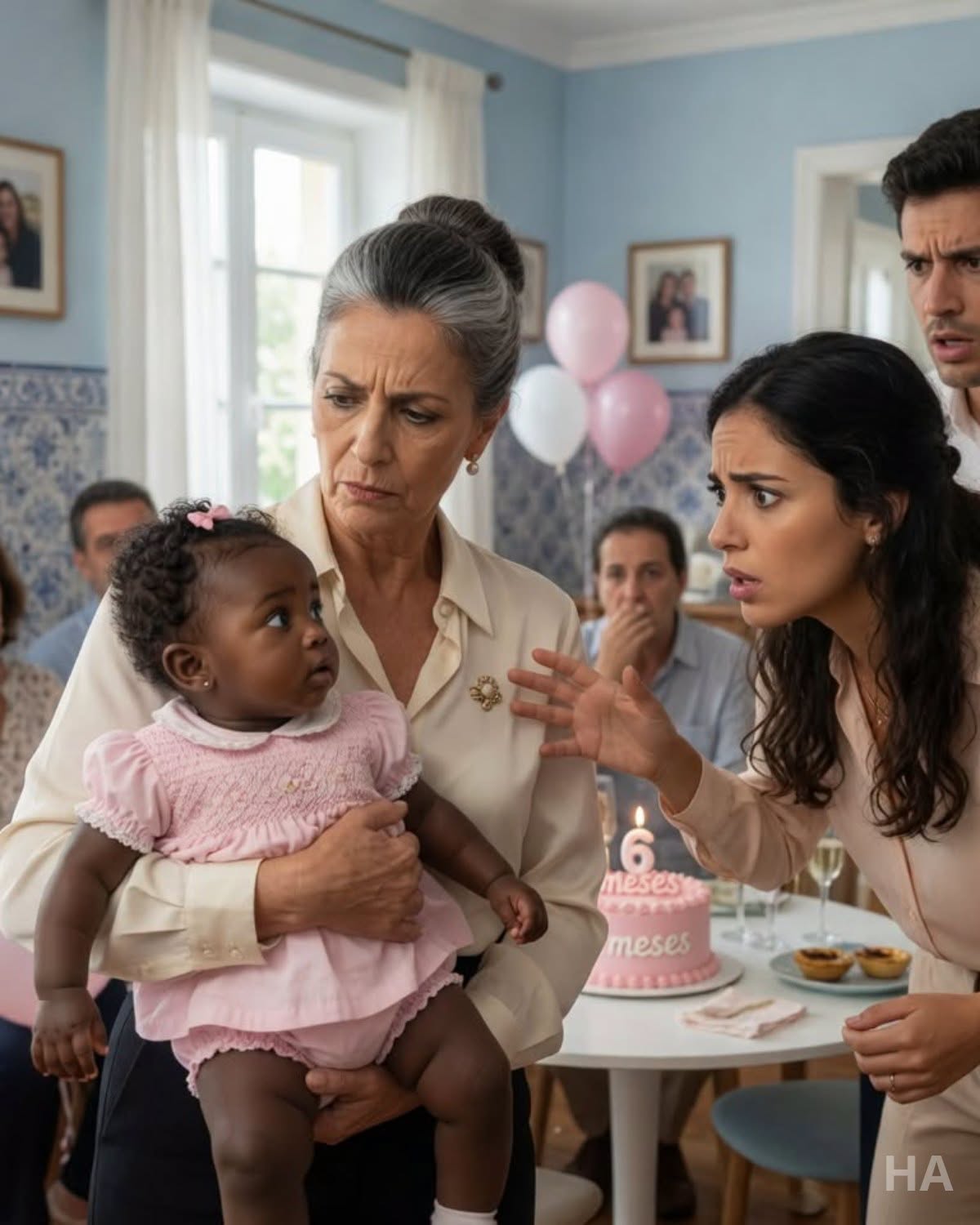
"Mariana, you’re scaring me," Diego said, his hand reaching out to touch my arm. "The test is positive. It’s 99.99%. Why do you look like someone died?"
I couldn't speak. I simply picked up the phone with a hand that felt entirely detached from my body and handed it back to him. My finger pointed directly at the second page, at the small red asterisk that looked like a drop of blood on the white screen.
Diego took the phone. His eyes scanned the text quickly, then slowed down. He read it once. He read it twice. I watched his face transition from confusion to disbelief, his eyebrows drawing together as he tried to decipher the medical jargon.
"I don't... I don't understand what this means," he said, his voice dropping into a flat, defensive tone. "Maternal reference profile? Is this talking about you? Did they mess up your sample?"
"No, Diego," I whispered, my heart hammering a furious, terrifying rhythm against my ribs. "Look at the labels. The maternal reference profile isn't mine. That’s the comparative baseline for the family lineage you requested from the archive—the Whitmore maternal line. The one Grace provided to the registry five years ago when she did that big genealogical project for the historical society."
Diego’s breath hitched. He stood up, his body rigid, his eyes locked on the screen as if he could force the words to change by sheer willpower. "That’s impossible. It’s a glitch. Labs make mistakes all the time. They mix up samples. They switch vials. This is a commercial lab, Mariana, it’s not an absolute forensic science."
"It’s a top-tier clinical laboratory, Diego," I said, rising from the floor and leaving Valentina playing with her blocks. I stepped close to him, taking his cold hands in mine. "They don't glitch on baseline chromosomal markers. Look at the data. Your paternal line matches the classic Western European markers of the late Arthur Whitmore—your father. The database verified that relationship through the paternal lineage index. You are a Whitmore. You are Arthur’s son."
Diego looked at me, his eyes wide and vacant with a sudden, primitive terror. "Then... then why does it say 0% for the mother? Grace gave birth to me. I’ve seen the photos, Mariana. I’ve seen the picture of her in the hospital bed at Northwestern Memorial, holding me in a yellow blanket. I have my birth certificate in our fireproof box in the closet. It says Mother: Grace Eleanor Sinclair Whitmore."
"I know," I said, my mind racing through a hundred different scenarios, each one more explosive than the last. "I know, babe. But science doesn't lie about mitochondria. Maternal DNA is passed down directly from mother to child without recombination. If you were Grace’s biological son, your maternal marker match would be a perfect 100%. It cannot be 0% unless..."
"Unless what?" he demanded, his voice cracking, a raw, painful sound that made Valentina look up from her toys and whimpering slightly.
"Unless Grace didn't give birth to you," I said softly. "Or... unless you were adopted and no one told you. Or something happened in that hospital thirty-two years ago that changed everything."
Diego dropped back onto the kitchen chair, the phone slipping from his fingers onto the table. He buried his face in his hands, his chest heaving with silent, ragged breaths. The world he had lived in for thirty-two years—the world of Whitmore prestige, of ancestors who came over on the Mayflower, of Grace’s endless lectures about maintaining the purity of their social register—had just cracked down the center and revealed an abyss.
I sat beside him, wrapping my arms around his trembling shoulders. "We can call the lab," I suggested quietly. "We can demand a manual review of the data. We won't say anything to anyone until we are absolutely, entirely certain."
Diego didn't move for a long time. The apartment grew dark as the sun dipped below the city skyline, leaving only the blue glow of the kitchen appliances to illuminate the room.
Finally, he lifted his head. His eyes were no longer wet; they were dry, cold, and focused with a terrifying, absolute clarity.
"No," he said, his voice dropping an octave. "We aren't just calling the lab. We’re going to find out exactly what my mother has been hiding. Because suddenly... suddenly a lot of things in my childhood make a very different kind of sense."
He stood up, walked to the hallway closet, and pulled down the heavy, black metal lockbox where we kept our marriage license, the apartment deed, and our vital statistics. He brought it to the table, his fingers steady as he punched in the combination.
He pulled out his original birth certificate—the thick, cream-colored paper with the gold embossed seal of the State of Illinois, dated November 14, 1994.
He stared at it, his thumb tracing the name Grace Sinclair Whitmore.
May you like


"She was so protective of this paper," Diego whispered, his eyes flashing with an old memory. "When I needed it for my passport when I was sixteen, she wouldn't let me touch it. She insisted on going to the passport office with me, holding the document herself, handing it to the clerk, and taking it back the second they were done. I thought she was just being her usual, neurotic self about important documents."
He looked at me, his expression grim. "But she wasn't protecting the paper, Mariana. She was protecting the lie."


