Chapter 2 - The Swab and the Waiting
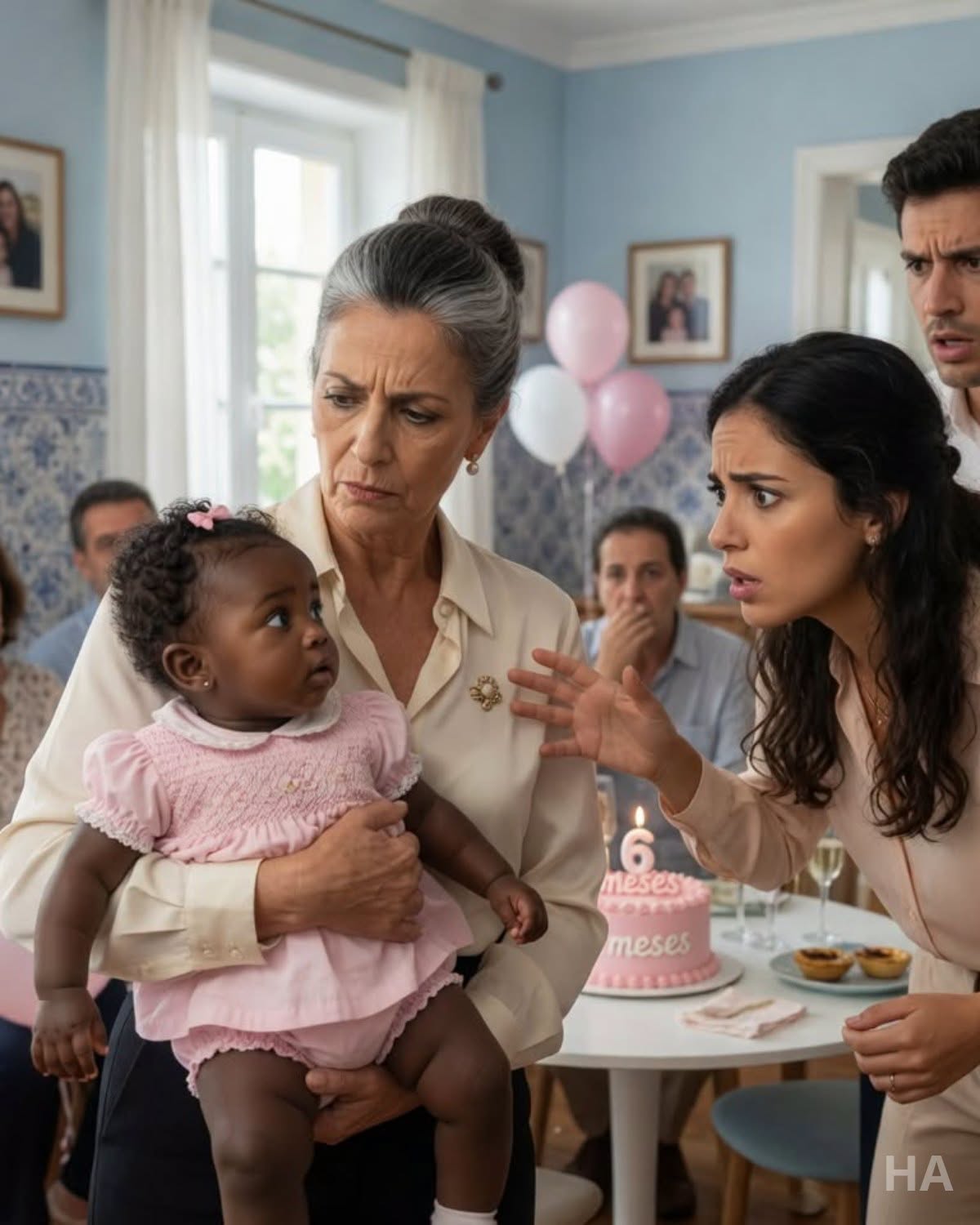
The atmosphere inside our small Chicago apartment in the days following Valentina’s six-month celebration was heavy, thick with an unspoken countdown. The memory of Grace standing in our living room, demanding a DNA test with all the cold authority of a high court judge, hung over us like a winter fog that refused to burn off. Every time I looked at the entryway where she had stood, I could still hear the echo of her voice—“Still just as dark.”
Diego was true to his word. He did not call her. He blocked her number, and he told his aunts in Lake Forest that if anyone carried a single piece of gossip from Grace to our doorstep, they would find themselves locked out of our lives as well. But blocking a person on a smartphone does not block the poison they have already injected into your reality.
On Tuesday morning, the DNA collection kit arrived. It was a deceptively simple cardboard box, white and blue, containing sterile cheek swabs, plastic vials, and a set of instructions written in dry, clinical prose. It felt entirely too sterile for something that carried the weight of our family's honor.
Diego sat at the kitchen table, staring at the box as if it were a live explosive. The morning sun cut through the blinds, casting long bars of light across his face. He looked exhausted. The skin beneath his eyes was bruised with sleeplessness, his shoulders slightly hunched.
"We don't have to do this, Mariana," he said, his voice barely louder than a whisper. He looked up at me, his eyes pleading. "I know who my daughter is. I look at her and I see myself. I see you. I don't need a lab tech in a white coat to tell me I love my own child."
I walked over to him, carrying Valentina against my shoulder. She was cutting a tooth, her little mouth damp against my neck, her tiny fingers tangled in my hair. I kissed the top of her soft, dark-haired head before turning to my husband.
"I know you don't need it, Diego," I said gently, placing a hand on his shoulder. "But look at what happened at the lunch last month. Look at how they whisper. If we don't do this, Grace will spend the next twenty years telling everyone that we hid from the truth because we were afraid. Valentina will grow up hearing those whispers. She will see the looks her grandmother gives her, and she will start to wonder if there is something wrong with her skin, something wrong with her existence. I will not let Grace steal my daughter's peace before she’s even old enough to speak."
Diego closed his eyes, his chest rising and falling in a long, ragged sigh. When he opened them, the doubt was gone, replaced by a quiet, fierce determination. "Okay. Let's do it."
The process took less than five minutes. I rolled the synthetic tip of the swab against the inside of Valentina’s smooth, pink cheek, her eyes wide with innocent curiosity as she tried to suck on the plastic stick. Then Diego swabbed his own mouth, his jaw tightening as he sealed his sample into the sterile envelope. Finally, I did mine, ensuring the lab had a complete parental matrix to prevent Grace from claiming any administrative loopholes.
We walked to the post office together, holding hands, Diego pushing the stroller with a protective rigidity. When the envelope slid down the metal chute into the collection bin, a strange sensation washed over me—not fear, but a cold, crystalline clarity. The die was cast.
The lab estimate said ten to fourteen business days.
Those two weeks became a masterclass in psychological endurance. Every time the mail carrier walked up the concrete steps of our building, my chest tightened. Every time Diego’s phone buzzed with an unknown number, we both froze, thinking it might be the clinic or, worse, Grace attempting to break the blockade through a different line.
Grace, meanwhile, was not silent. Though she couldn't reach Diego directly, she began using the Whitmore family network as a megaphone. One evening, Diego’s cousin Clara called him from Boston. She was a sweet girl, mostly detached from the family drama, but she sounded deeply uncomfortable.
"Diego, I’m sorry to bother you," Clara said over the speakerphone while I was folding laundry in the living room. "But Aunt Grace called my mom yesterday. She’s... she’s telling people that you’re living in a state of denial. She said Mariana is keeping you hostage in that apartment because she’s terrified of what the test will show. She even hinted that she’s looking into changing the family trust provisions regarding future inheritance if the 'lineage isn't verified.'"
Diego’s grip on the phone was so tight his knuckles turned white. "Let her change the trust, Clara. I don't want a single dime of Whitmore money if it comes with my mother's shadow attached to it. Tell your mom to hang up on her the next time she calls."
After he hung up, Diego stood by the window, looking out at the gray Chicago skyline. "She’s panicking," he said suddenly.
I looked up from the laundry basket. "What do you mean?"
"My mother is a creature of control," Diego said, turning around. His expression was analytical, his corporate strategy background kicking in. "She’s used to people begging for her approval. When I threw her out of the house, she expected me to crawl back within forty-eight hours to apologize for disrespecting her. Now that weeks have passed and the test is actually happening, she realizes she’s lost her leverage. She’s trying to build a narrative among the relatives so that when the test comes back positive, she can claim she was just doing her 'due diligence' as the family matriarch."
"Well, her due diligence is about to hit a brick wall," I said, though a small, persistent knot of anxiety remained in my throat. It wasn't doubt about Valentina's paternity—I knew with every fiber of my being that Diego was her father. It was the sheer exhaustion of being evaluated, of having my integrity put on trial by a woman who viewed my background as an unfortunate stain on her family's pristine social register.
On the thirteenth day, the email arrived.
It was 4:30 p.m. I was sitting on the rug, watching Valentina attempt to crawl toward a plush elephant, when my phone vibrated with a notification from Northwestern Genetic Laboratories.
The subject line was stark: Diagnostic Results Available for Review.
My breath caught in my throat. I couldn't move. My fingers hovered over the glass screen, suddenly heavy as lead.
"Diego!" I called out, my voice cracking.
He came running out of the bathroom, a towel in his hand, his hair damp. He saw the look on my face and immediately dropped to his knees beside me on the rug.
"It's here?" he asked.
I nodded, sliding the phone into the space between us. "Open it. I want us to look at it together."
Diego took a deep breath, his finger tapping the screen. The secure portal loaded with an agonizing slowness, a little blue circle spinning against the white background. Then, the PDF document flashed into view.
Our eyes skipped past the legal disclaimers, past the laboratory accreditation numbers, straight to the statistical breakdown at the bottom of the first page.
Child: Valentina Salazar Whitmore Alleged Father: Diego Arthur Whitmore Probability of Paternity: 99.99998%
A sound escaped Diego’s throat—a half-sob, half-laugh of pure, unadulterated relief. He leaned forward, pressing his forehead against mine, his tears spilling onto my cheek.
"I told you," he whispered, his voice trembling with an emotion that had been suppressed for months. "I told you, Mariana. It's done. It's completely done."
I held him, my own tears finally flowing, the immense pressure of the last six months lifting off my chest like a physical weight. Valentina, confused by our sudden emotional outburst, let out a small, experimental chirp and grabbed Diego’s damp hair with both hands, pulling him down to her level. We laughed through our tears, burying our faces in her soft neck, a complete, unbroken circle of three.
But then, as I reached down to pick up the phone to save the document to our hard drive, my eyes caught the second page of the report.
The laboratory had included a standard supplemental analysis—a comparative genetic marker report that broke down the ancestral and familial haplogroups of both parents to establish the baseline for the paternity calculation. It was standard procedure for multi-generational verification tests.
My eyes scrolled down the rows of alleles, the letters and numbers representing chromosomes and heritage.
Then I stopped.
I blinked, thinking the tears in my eyes were blurring the text. I rubbed my face and looked again.
The report listed Diego’s genetic markers alongside the reference database for the maternal and paternal lines he had submitted. Because Diego had used his full profile, the system had cross-referenced his markers against the standard North American and European databases that matched the Whitmore family’s well-documented English and Scottish ancestry.
Under the column labeled Maternal Lineage Congruence Index (M-LCI), there was a bold, red asterisk.
Beneath it, in small, clinical, unmistakable typeface, the laboratory had printed a warning notice:
ATTENTION: Maternal genetic markers analyzed for Alleged Father (Diego A. Whitmore) demonstrate a 0.00% statistical correlation with the maternal reference profile provided. Genetic variance indicates a complete absence of biological maternity between the maternal source and the subject.
The phone slipped from my hand, clattering against the hardwood floor.
Diego looked up, his brow furrowing as he saw the sudden, deathly paleness of my face. "Mariana? What is it? What’s wrong?"
I looked at my husband—the man I had known for nearly a decade, the man who had his mother’s sharp jawline and her high forehead—and my voice completely failed me.
The DNA test had proven that Valentina was his daughter.
May you like


But it had also proven something impossible.
Diego was not Grace Whitmore’s son.


