CHAPTER 4 — THE TRUTH MY FATHER COULDN'T IGNORE
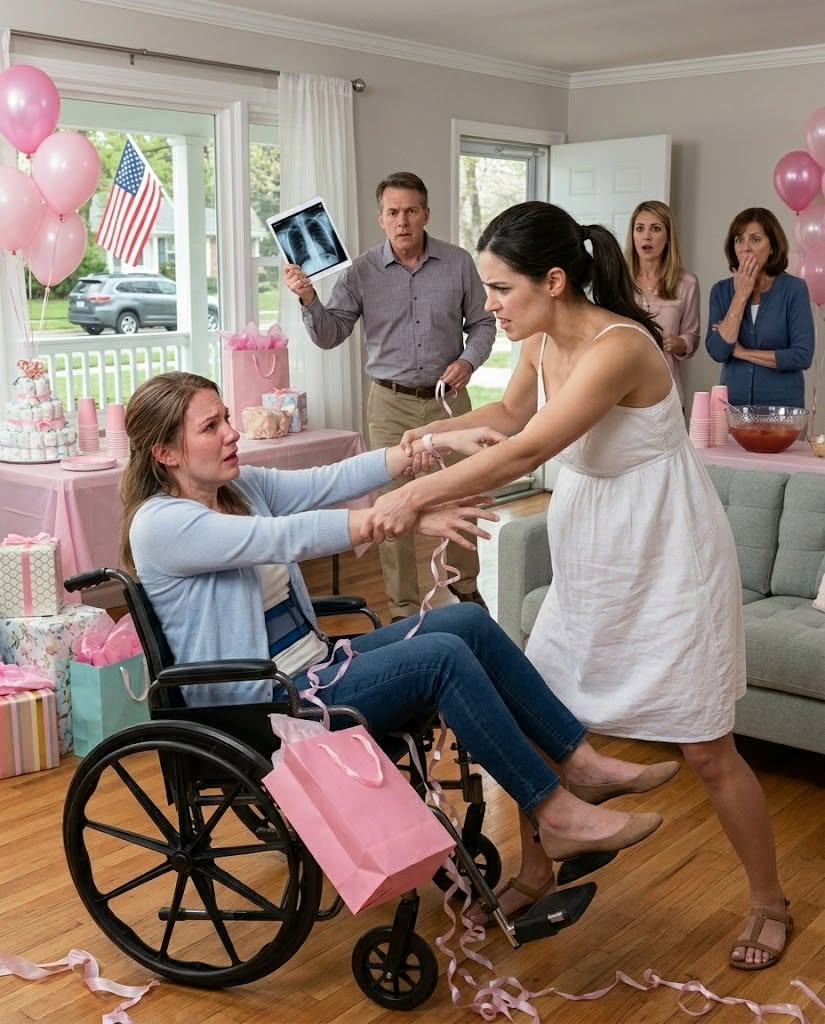
CHAPTER 4 — THE TRUTH MY FATHER COULDN'T IGNORE
For three days, my apartment stayed quiet.
No surprise visits.
No phone calls I answered.
Just the steady rhythm of physical therapy exercises, medication alarms, and short walks from the couch to the kitchen.
My back slowly settled down.
My heart didn't.
On Wednesday afternoon, there was another knock at the door.
This time, it wasn't Rebecca.
It was my father.
He stood in the hallway holding a small cardboard box.
My father had always looked solid—broad shoulders, calloused hands, the kind of man who could repair anything around the house.
Except relationships.
"I won't stay long," he said.
I hesitated.
Then unlocked the door.
He stepped inside quietly.
His eyes landed on the wheelchair parked beside the dining table.
For the first time, he didn't look away.
"I brought some of your things."
He set the box on the table.
Inside were photo albums.
A knitted blanket my grandmother had made.
And my cane.
The same cane Aunt Carol had hidden at Easter.
"I found it in the hall closet."
I stared at it.
"No one ever gave it back."
"I know."
He rubbed the back of his neck.
"I should have."
Neither of us spoke for a while.
Finally, he asked,
"How's your back?"
I almost laughed.
Not because it was funny.
Because after two years, it was the first time he'd asked without sounding impatient.
"It hurts."
He nodded slowly.
"I believe you."
Those three words should have brought relief.
Instead, they made me cry.
"I'm sorry," he whispered.
"I wasn't there."
I wiped my eyes.
"No."
"You weren't."
"I kept telling myself the doctors would say something if it was really serious."
"They did."
"I know."
"I just... didn't listen."
He looked around the apartment.
The shower chair in the bathroom.
The reacher beside the couch.
The grab bars mounted near the toilet.
Things he'd never seen because he'd never visited.
"You've been living like this..."
"For two years."
"Alone?"
I nodded.
"Mostly."
He sat down heavily.
"I thought Rebecca was exaggerating when she said you made everything about your injury."
I looked at him.
"You believed everyone except me."
His shoulders slumped.
"Yes."
That evening, Rebecca called again.
This time, I answered.
Neither of us spoke at first.
Finally, she said,
"Mom's coming tomorrow."
I sighed.
"I don't know if I'm ready."
"I don't think she is either."
The next morning, my mother arrived carrying a casserole.
It was absurdly normal.
The same chicken and rice she'd made whenever someone in the family was sick.
She stood awkwardly in my kitchen.
"I didn't know what else to bring."
I smiled faintly.
"The casserole's a good start."
She laughed through tears.
Then the laughter disappeared.
"I failed you."
I stayed quiet.
"When you were little, every scraped knee sent me running."
She looked down at her hands.
"But after the accident..."
"I kept waiting for you to become who you used to be."
"I was trying."
"I know."
"No."
Her voice broke.
"I was waiting."
"You were healing."
"They aren't the same thing."
She reached into her purse.
"I found something."
It was an old birthday card.
My tenth birthday.
Inside, in her handwriting, she'd written:
To my brave girl—I'll always believe you, even when nobody else does.
She stared at the words.
"I forgot the promise."
I looked at the card for a long time.
"You did."
That weekend, Dr. Brennan cleared me for another follow-up appointment.
The CT scan looked stable.
The inflammation had begun to settle.
"You've been lucky," he said.
"I know."
He closed my chart.
"But Emma..."
"Yes?"
"If anyone puts their hands on you like that again..."
His expression hardened.
"I don't care if it's family."
"Leave."
Before I left the office, he handed me another document.
"This isn't medical."
I looked at the title.
Patient Rights Following Physical Assault During Medical Recovery
I frowned.
"Assault?"
He met my eyes.
"Someone forcibly removed you from a medically necessary wheelchair against your will."
He paused.
"Call it what it was."
That night, Rebecca asked if we could meet.
Not at her house.
Not at mine.
A small park halfway between.
I almost said no.
Instead, I agreed.
She was already sitting on a bench when I arrived.
No decorations.
No audience.
Just two sisters.
She stood carefully.
"I read everything Dr. Brennan gave me."
I nodded.
"I also spoke with my therapist."
That surprised me.
"I started this week."
She looked ashamed.
"She asked me why it bothered me so much to see you in a wheelchair."
I waited.
Rebecca's eyes filled with tears.
"Because every time I looked at you..."
"I was reminded that life can change without asking permission."
She took a shaky breath.
"I kept trying to make you stand because..."
"If you could just get better..."
"...then maybe the world wasn't as frightening as it suddenly felt."
The confession hung between us.
It didn't excuse what she'd done.
But it explained something.
Not cruelty.
Fear.
Misplaced, damaging fear.
I looked at my sister for a long moment.
Then I quietly said,
"I can forgive someone who was afraid."
Rebecca's eyes widened.
"But I can't trust someone who refuses to change."
She nodded.
"I know."
"And I'm going to earn that trust."
For the first time since the accident...
I believed she meant it.
A week later, the family gathered again.
Not for a celebration.
Not for a holiday.
For a meeting.
My father had called everyone together.
Aunt Carol.
Jennifer.
My mother.
Rebecca.
No decorations.
No cake.
Just folding chairs in the church community room.
Dad stood at the front.
He cleared his throat.
"I asked everyone here because we owe Emma more than private apologies."
The room fell silent.
He looked at me.
Then back at the family.
"For two years..."
"We treated her pain like it was an inconvenience."
"We confused disability with weakness."
"And when she needed us most..."
"We made her feel like she had to prove she was hurt."
He paused, his voice unsteady.
"That ends today."
One by one, each family member apologized.
Some spoke through tears.
Some struggled to find the right words.
Some admitted they had chosen comfort over compassion.
No apology erased the past.
But for the first time...
No one asked me to pretend it hadn't happened.
And that was the beginning of something my family had forgotten long before the accident.
May you like


Not perfection.
Accountability.


