Chapter 9 - The Trial of the Salazars
Six months later, the federal palace of justice in Guadalajara was packed with journalists and spectators. The "Avant-Garde Transit Fraud" had become the biggest political scandal of the decade in Western Mexico, dominating headlines and exposing the deep roots of white-collar crime in the state.
Rodrigo and Hector Salazar sat at the defense table, dressed in standard tan inmate uniforms. Rodrigo had lost weight; his hair was cropped short, his luxury watch replaced by a plastic identification band. He didn't look at the gallery where Mariana and her mother sat in the front row.
The state prosecutor stood before the three-judge panel, holding up the files Mariana had pulled from the bank vault.
"The evidence is irrefutable," the prosecutor argued. "The defendants used intimidation, forgery, and eventually arson to systematically eliminate any obstacle to their financial network. The death of Don Aurelio Salazar Dunn was not a tragic accident; it was the direct consequence of a criminal conspiracy designed to enrich a family at the cost of innocent blood."
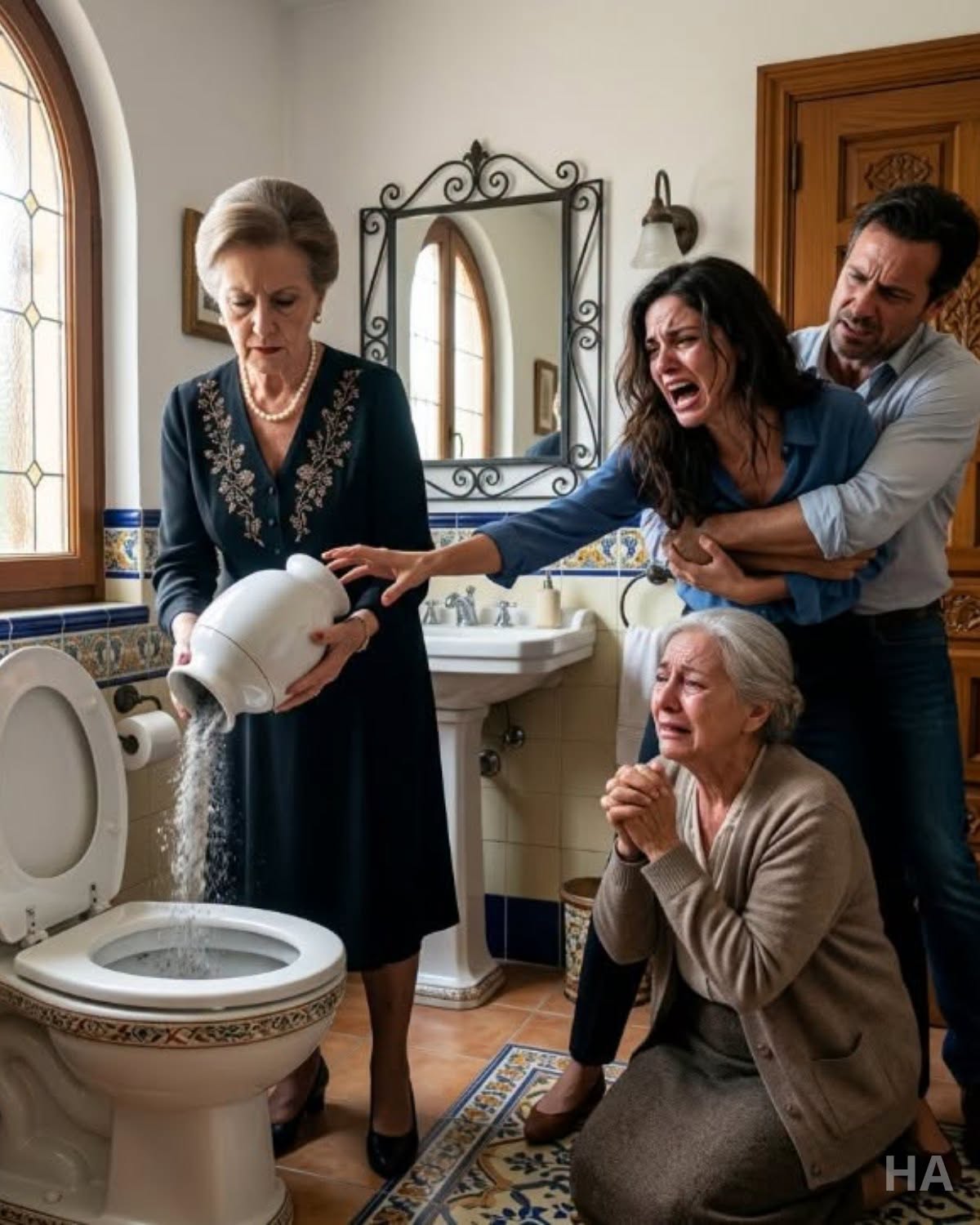
Mariana took the stand as the lead witness. She spoke for three hours, her voice clear, professional, and completely devoid of the fear that had defined her previous four years. She detailed every insult, every financial transaction, and the final, monstrous act of psychological cruelty committed in her bathroom.
When the defense attorney tried to suggest that Mariana was simply a bitter ex-wife looking for corporate revenge, she produced the email logs from her father's safe deposit box, showing Rodrigo’s direct authorization for the forged liens.
The verdict was delivered at 6:15 p.m.
Hector Salazar: thirty-two years for federal corruption, racketeering, and corporate homicide.
Rodrigo Salazar: twenty-four years for conspiracy, fraud, and accessory to arson resulting in death.
Doña Elvira received a ten-year suspended sentence under house arrest due to her age, her assets completely stripped, forced to live in a small, state-subsidized apartment in the periphery of the city, dependent on food charity from the local parish.
As the guards led Rodrigo away, he stopped for half a second, looking at Mariana through the security partition. He opened his mouth as if to say something—perhaps an apology, perhaps a plea—but Mariana simply turned her back to him, taking her mother’s arm as they walked out of the courtroom into the courtyard.
The journalists swarmed them on the steps, their flashes blinding in the twilight.
May you like


"Señora Salazar! Are you satisfied with the sentence?" a reporter yelled, thrusting a microphone forward.
Mariana stopped, looking into the lens of the main television camera. "My name is Mariana Salazar Dunn," she said clearly. "And this was never about satisfaction. This was about showing that the people who build this country with their hands cannot be erased by the monsters who buy it with stolen money. The truth does not bring bad energy. It brings justice."


