CHAPTER 5 — The Second Chance That Had to Be Earned
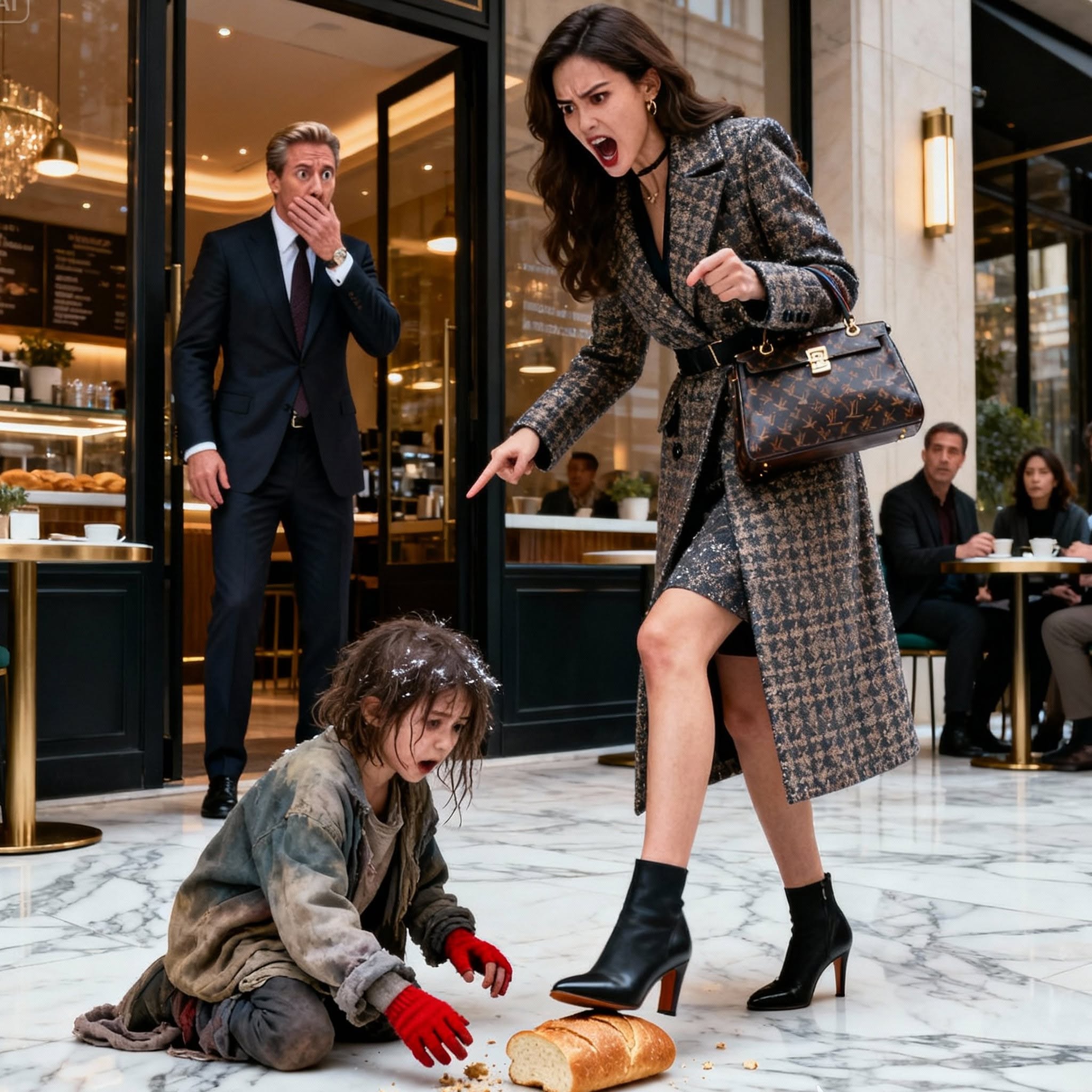
CHAPTER 5 — The Second Chance That Had to Be Earned
Christmas came and went, but the story from Roseline Café refused to disappear.
The video had spread far beyond New York. Millions of people had watched the wealthy model throw food at a child she believed was homeless. Television commentators debated privilege and compassion. Podcasts discussed the responsibility that came with wealth. Schools even used the clip in classroom discussions about bullying.
Yet Richard Hayes never gave a single interview.
Whenever reporters asked for a statement, his assistant replied with the same sentence.
"Mr. Hayes believes actions speak louder than public comments."
Instead of defending himself or criticizing Lily, Richard focused on something else entirely.
Helping.
Within weeks, Hayes Foundation announced a new initiative called Open Doors, a citywide program providing meals, temporary housing, school supplies, and counseling for homeless families.
Richard appointed experienced social workers—not celebrities—to lead it.
When journalists praised him for his generosity, he answered simply,
"This wasn't created because of one incident. It was created because I realized I had spent too much time looking at numbers and not enough time looking at people."
Evelyn became the program's youngest volunteer.
Every Saturday, she packed food boxes alongside college students, retirees, and company employees.
She insisted on learning everyone's names.
One afternoon she met a girl about her own age sitting quietly in the corner of a shelter library.
The girl's name was Maya.
Unlike Evelyn's disguise, Maya's worn coat and tired eyes were real.
Her family had been living in shelters for almost six months after her father lost his job and her mother became seriously ill.
At first Maya barely spoke.
But Evelyn kept visiting.
They played board games.
Read books together.
Shared hot chocolate after volunteer shifts.
Eventually Maya smiled more often.
One day she asked quietly,
"Were you really the girl in that video?"
Evelyn nodded.
"I was pretending."
"I wasn't."
Evelyn looked down.
"I know."
Maya smiled gently.
"But because of you... people noticed us."
Those words stayed with Evelyn far longer than any newspaper headline.
Across the city, Lily's world looked very different.
The luxury apartment she had once loved now felt painfully quiet.
Her modeling contracts had disappeared one after another.
Fashion brands no longer returned her calls.
Friends who once invited her to exclusive parties suddenly claimed they were "too busy."
She realized many of those friendships had existed only because of the attention she attracted.
Without it...
She was alone.
One rainy afternoon she visited her grandmother, Margaret Carter, who lived in a modest apartment in Queens.
Margaret had raised Lily after her parents divorced.
The elderly woman welcomed her with a warm hug.
"You've lost weight."
"I haven't been hungry."
Margaret poured tea into two old ceramic cups.
After several minutes of silence, she finally asked,
"Tell me the truth."
"About what?"
"Were you really that cruel?"
Lily stared into her tea.
"I don't know when I became that person."
Margaret reached across the table.
"I do."
Lily looked up.
"You started believing that expensive things made people valuable."
She paused.
"And ordinary people became invisible to you."
Tears rolled down Lily's cheeks.
"I ruined everything."
Margaret shook her head.
"No."
"You revealed everything."
"There is a difference."
That conversation changed something inside Lily.
The next morning she cut up every luxury credit card except one.
She sold several designer handbags and expensive jewelry.
Instead of shopping, she quietly donated the money to shelters—without attaching her name.
No cameras.
No social media posts.
No interviews.
Just anonymous gifts.
It didn't erase what she had done.
She knew that.
But for the first time in years...
She wasn't trying to impress anyone.
Meanwhile, Richard received an unexpected visitor.
It was Daniel Brooks, owner of Roseline Café.
He carried a folder under one arm.
"I owe you an apology."
Richard motioned for him to sit.
"For what?"
Daniel sighed.
"My staff saw everything."
"They stayed silent because they were afraid of upsetting wealthy customers."
He placed the folder on the desk.
"We're changing that."
Inside were new company policies.
Employees could refuse abusive customers.
Free meals would be available every evening for anyone genuinely hungry.
Unused food would be donated instead of thrown away.
Richard smiled.
"That's a better response than any apology."
Daniel nodded.
"Your daughter reminded us that kindness should never depend on someone's bank account."
Late that evening, Evelyn asked her father a question.
"Dad?"
"Yes?"
"Do you think people can really change?"
Richard didn't answer immediately.
Instead he looked out the window at the city lights.
"I think everyone can choose differently tomorrow."
She waited.
"But change isn't something you announce."
May you like


"It's something you repeat."
"Every day."


