Chapter 2 - The Bill They Thought I Would Always Pay
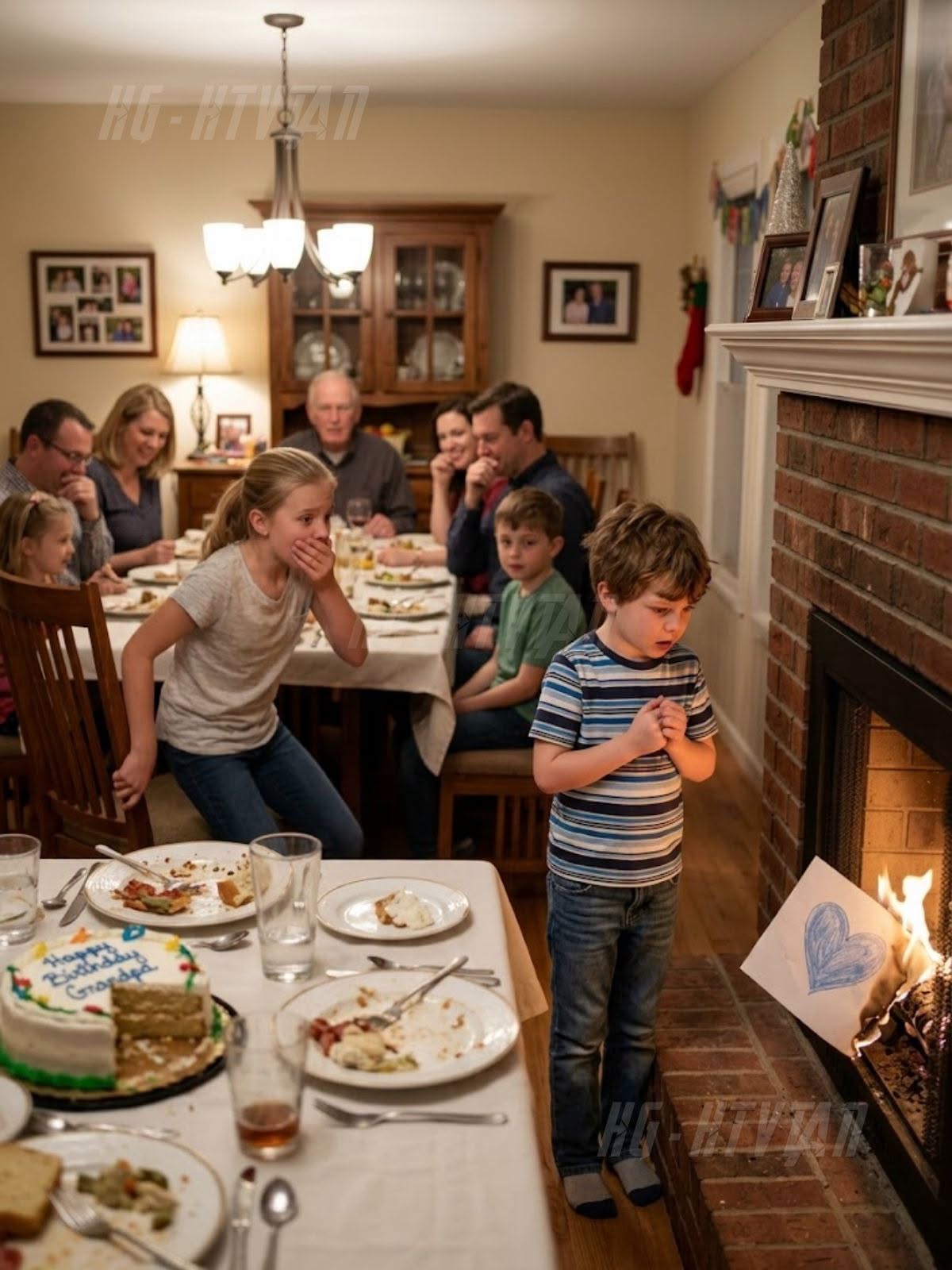
My father called again before noon.
Then again.
By the fifth call, I finally answered.
I didn't say hello.
I simply waited.
For a few seconds, all I heard was his breathing.
Then he spoke.
"Lauren... thank God."
His voice sounded smaller than I had ever heard it.
"I need you to come over."
"No."
The word left my mouth before I even thought about it.
Silence.
"I haven't even told you what's wrong."
"You only call when something costs money."
Another silence.
Longer this time.
Finally, he whispered,
"...Please."
I looked across the kitchen.
Caleb was sitting at the table, carefully outlining another blue heart with a crayon.
He wasn't listening.
Or maybe he was.
Children always hear more than adults think.
"What happened?" I asked.
Dad cleared his throat.
"The bank."
Of course.
Always the bank.
"The mortgage?"
"No..."
His voice cracked.
"The lake house."
I closed my eyes.
The lake house.
The same property whose taxes I had quietly paid for three years.
The same place where Heather's family spent every summer posting smiling photos online while Caleb and I were invited only if someone canceled.
"What about it?"
"They're foreclosing."
I didn't answer.
"The payments stopped."
"Yes," I said calmly.
"I know."
His breathing became sharp.
"They said we have ten days."
"I know."
"They'll take it."
"I know."
His voice suddenly changed.
The fear disappeared.
The entitlement came back.
"You have the money, Lauren."
There it was.
Not Can you help?
Not Would you consider helping?
Just certainty.
Like my savings belonged to him.
"You'll fix it."
I looked at Caleb again.
He had started drawing snowflakes around the blue heart.
"So," I asked quietly, "did you call to apologize to your grandson?"
"...What?"
"Did you call because you finally realized what happened to Caleb?"
"This isn't about that."
Exactly.
It never was.
"It is for me."
Dad sighed impatiently.
"Lauren, don't mix emotions with business."
Business.
That's what my son's humiliation had become.
A scheduling conflict.
An inconvenience.
I laughed.
Not because anything was funny.
Because I finally understood how impossible this conversation had always been.
"You burned the wrong thing," I said.
"What are you talking about?"
"You thought Dylan burned a drawing."
I paused.
"He burned the bridge."
Then I hung up.
Three hours later, Heather was pounding on my front door.
Not knocking.
Pounding.
I opened it just enough to step outside before she could look into the house.
She crossed her arms.
"So this is really happening?"
"I guess it is."
"You'd let Dad lose everything?"
I tilted my head.
"Interesting."
"What?"
"You called it his house."
She frowned.
"It is."
"Then why have I been paying for it?"
Her face changed.
Just slightly.
Enough.
She hadn't known.
Of course she hadn't.
Dad had never told anyone.
He preferred looking successful while someone else quietly carried the weight.
"What are you talking about?" she asked.
I walked back inside for a moment.
Opened the filing cabinet.
Returned with a thick folder.
Receipts.
Bank confirmations.
Tax statements.
Wire transfers.
Every payment.
Every bailout.
Every emergency.
Every secret.
I handed her the folder.
She flipped through it.
One page.
Two.
Five.
Ten.
The color drained from her face.
"This..."
Another page.
"...These can't..."
Another page.
"You paid..."
She couldn't even finish the sentence.
"Four years," I answered.
"I paid four years."
Heather stared at me as if she had never actually seen me before.
"I thought Dad handled all of this."
"No."
"I thought—"
"I know what you thought."
She swallowed hard.
"You never told anyone."
"You never asked."
For the first time since arriving, she looked uncomfortable.
Not guilty.
Uncomfortable.
Because the family story she'd believed her whole life was collapsing in her hands.
Dad wasn't the provider.
He wasn't the hero.
He wasn't holding everyone together.
I was.
Quietly.
Invisible.
Exactly the way they preferred.
Heather suddenly slammed the folder shut.
"This still doesn't excuse what you're doing."
There it was.
The moment almost looked like accountability.
Then she ran right back to blame.
"Dylan made a mistake."
"No."
"He—"
"He made a choice."
"He's twelve!"
"And you're forty-two."
She blinked.
"What does that mean?"
"It means someone should have taught him empathy before now."
Her jaw tightened.
"You always think you're better than us."
"No."
I looked her directly in the eyes.
"I just finally stopped accepting less."
She stepped closer.
"If Dad loses that house..."
I waited.
"...this family will never forgive you."
I smiled.
Slowly.
Sadly.
"You already proved I wasn't family."
Her mouth opened.
Nothing came out.
Then the front door behind me creaked open.
Caleb peeked outside.
"Dad?"
He still sometimes called me that by accident after losing his father years earlier.
His little voice echoed across the porch.
"I made another picture."
Heather looked at him.
For one awkward second.
Then looked away.
Didn't smile.
Didn't ask to see it.
Didn't say hello.
She simply turned and walked toward her car.
Caleb watched her leave.
Then looked up at me.
"Was Aunt Heather mad?"
I knelt beside him.
"No."
"What was she?"
I thought about it.
"Surprised."
He nodded as though that answer made perfect sense.
Then he held up his drawing.
This time it wasn't our family.
It wasn't Grandpa.
It wasn't Christmas.
It was a bridge.
Half of it was broken.
On one side stood a little boy.
On the other side stood a crowd of people.
Between them, he had drawn bright blue water.
"I couldn't make the bridge fit," he said softly.
I stared at the picture.
A chill crawled up my spine.
Because somehow...
my seven-year-old son had drawn exactly what the adults still refused to see.
And at that very moment, my phone buzzed again.
A text from an unknown number.
May you like


It contained only one sentence.
"If you don't restore the payments by tomorrow morning... your father is going to prison."


